Whole genome sequencing of bacterial genomes - tools and applications
$49
ENROLL NOWCourse Overview
What You'll Learn
- The course will give the learners a basis to understand and be acquainted with WGS applications in surveillance of bacteria including species identification, typing and characterization of antimicrobial resistance and virulence traits as well as plasmid characterization.
- It will also give the opportunity to learners to learn about online tools and what they can be used for through demonstrations on how to use some of these tools and exercises to be solved by learners with use of freely available WGS analysis tools .
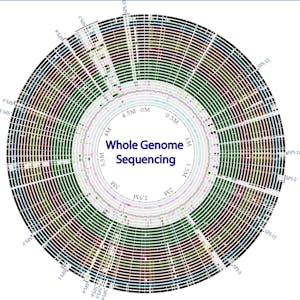
This course will cover the topic of Whole genome sequencing (WGS) of bacterial genomes which is becoming more and more relevant for the medical sector. WGS technology and applications are high on international political agenda, as the classical methods are being replaced by WGS technology and therefore bioinformatic tools are extremely important for allowing the people working in this sector to be able to analyze the data and obtain results that can be interpreted and used for different purposes. The course will give the learners a basis to understand and be acquainted with WGS applications in surveillance of bacteria including species identification, typing and characterization of antimicrobial resistance and virulence traits as well as plasmid characterization. It will also give the opportunity to learners to learn about online tools and what they can be used for through demonstrations on how to use some of these tools and exercises to be solved by learners with use of freely available WGS analysis tools . By the end of this course you should be able to: 1. Describe the general Principles in typing of Bacteria 2. Give examples of the applications of Whole Genome Sequencing to Surveillance of bacterial pathogens and antimicrobial resistance 3. Apply genomic tools for sub-typing and surveillance 4. Define the concept of Next-Generation Sequencing and describe the sequencing data from NGS 5. Describe how to do de novo assembly from raw reads to contigs 6. Enumerate the methods behind the tools for species identification, MLST typing and resistance gene detection 7. Apply the tools for species identification, MLST typing and resistance gene detection in real cases of other bacterial and pathogen genomes. 8. Describe the methods behind the tools for Salmonella and E.coli typing, plasmid replicon detection and plasmid typing 9. Utilize the tools for Salmonella and E.coli typing, plasmid replicon detection and plasmid typing in real cases of other bacterial and pathogen genomes. 10. Explain the concept and be able to use the integrated bacterial analysis pipeline for batch analysis and typing of genomic data 11. Demonstrate how to construct phylogenetic tree based on SNPs 12. Apply the phylogenetic tool to construct phylogenetic trees and explain the relatedness of bacterial or pathogen strains 13. Describe how to create your own sequence database 14. Utilize the MyDbFinder tool to detect genetic markers of interest from whole genome sequencing
Course FAQs
Is this an accredited online course?
Accreditation for 'Whole genome sequencing of bacterial genomes - tools and applications' is determined by the provider, Technical University of Denmark (DTU). For online college courses or degree programs, we strongly recommend you verify the accreditation status directly on the provider's website to ensure it meets your requirements.
Can this course be used for continuing education credits?
Many of the courses listed on our platform are suitable for professional continuing education. However, acceptance for credit varies by state and licensing board. Please confirm with your board and {course.provider} that this specific course qualifies.
How do I enroll in this online school program?
To enroll, click the 'ENROLL NOW' button on this page. You will be taken to the official page for 'Whole genome sequencing of bacterial genomes - tools and applications' on the Technical University of Denmark (DTU) online class platform, where you can complete your registration.